
By Jenny Livingston, Vice President | Human Resources, R&R Realty Group
For years, the office was simply where work happened. That assumption no longer holds. Across industries, business leaders are rethinking not just where work happens, but why it happens there at all.
Flexibility: No longer a perk, but a baseline
In a labor market where expectations have shifted and flexibility is no longer a perk but a baseline, the role of the physical workplace has changed in a meaningful way. The office is no longer just a backdrop to business operations. It plays a direct role in shaping culture, influencing hiring and retention, and supporting how people perform day-to-day.
Today, the most effective workplaces are designed with purpose. Employees are no longer evaluating an office based on size or amenities alone. They are asking whether the space helps them do their best work, whether it supports their well-being, and whether their time there feels worthwhile. In many ways, the office now has to earn its place.
Flexibility has been a major driver of this shift. What was once considered a perk is now expected, but what employees are really looking for is clarity and trust. When much of their work can be done from anywhere, they want to understand why being in the office matters.
The Workplace Experience
Organizations that are navigating this well are not relying on policy alone. They are creating environments that make the value of being together obvious. When people walk into a space and immediately experience connection, collaboration, and energy, the purpose of the office becomes clear without needing to be explained.
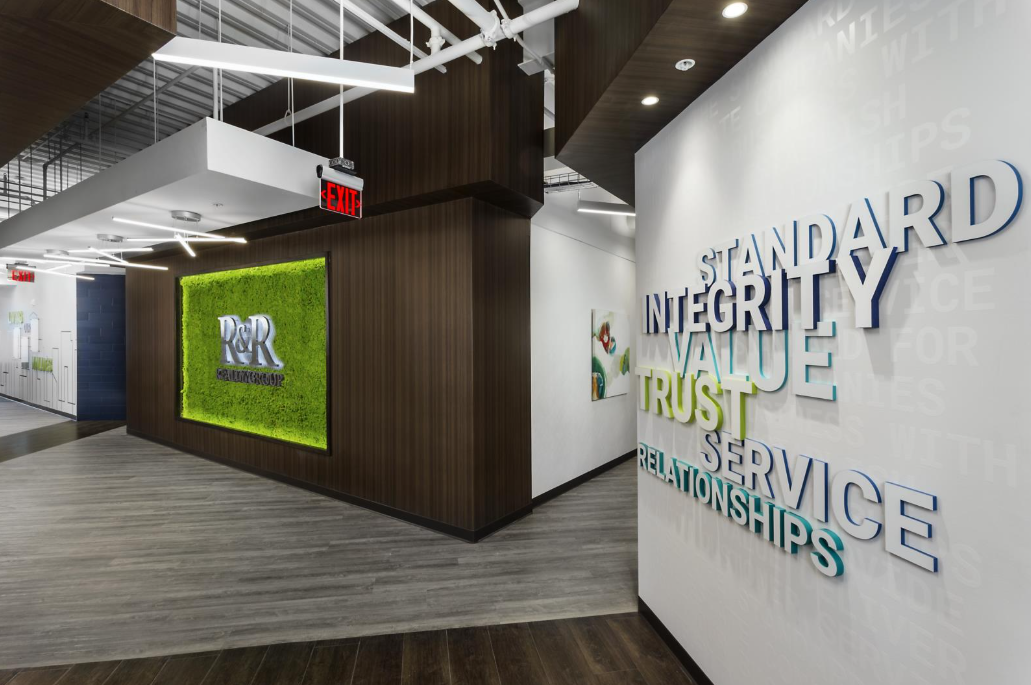
That experience starts the moment someone enters the workplace. For candidates especially, the office is one of the most immediate and tangible reflections of culture. It is not just about how the space looks, but how it feels and how people interact within it. Are conversations happening naturally? Do teams seem connected? Is there a sense of openness and approachability?
At R&R Realty Group, candidates often comment on the energy of the office during interviews. What stands out is not a specific feature, but the way people move through the space and interact with one another. Those everyday moments communicate far more about culture than any written description ever could
Intentional Design Matters
The design of a workplace plays a significant role in shaping those interactions. While formal meeting areas are important, much of the real value comes from informal moments. Quick check-ins, spontaneous conversations, and brief exchanges between teams often lead to stronger relationships and better collaboration.
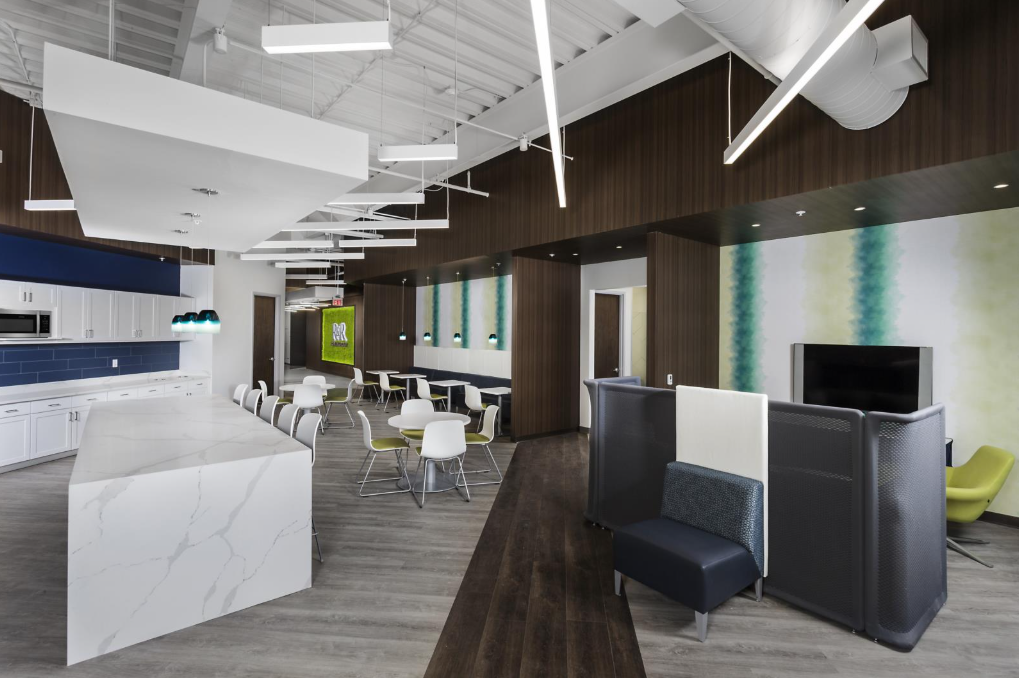
Those moments do not happen by chance. They are supported by spaces that allow people to naturally cross paths throughout the day. R&R refers to these spaces as ‘collision zones’. A well-designed office creates opportunities for this connection without forcing it, which over time strengthens how teams work together.
This has a direct impact on retention. Employees who feel connected to their colleagues and their organization are more likely to stay engaged and invested. The workplace contributes to that sense of connection in ways that are easy to overlook but difficult to replicate
That same environment also supports performance. When employees feel equipped, aligned, and connected, they are better positioned to do their best work. The workplace can reinforce shared goals, make leadership more accessible, and create opportunities for learning that happen naturally through day-to-day interaction. For newer employees in particular, being able to observe and engage in real time can accelerate their understanding and growth.
Office Space is a Strategy
For business leaders, the most important takeaway is to approach the office as a strategy, not a design project. Decisions about space should start with how teams work, what behaviors an organization wants to encourage, and how the environment can support both performance and well-being.
During R&R’s headquarter move to the Westfield Building in West Des Moines, that meant looking closely at how employees collaborate with one another and using that insight to shape the space in a practical way. Teams were positioned based on how they interact most often, while still allowing for natural points of connection across departments. The result is a workplace that feels intentional and very functional, not just visually appealing.
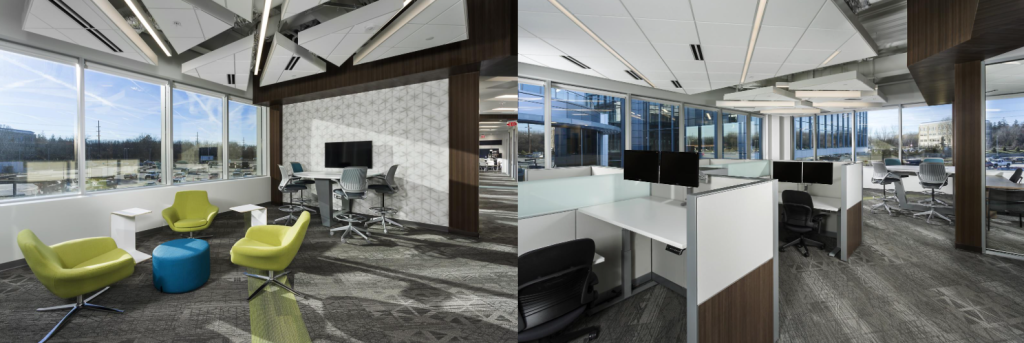
The workplace is no longer something that can be treated as an afterthought. It is an active part of how an organization operates and grows. For companies across the Des Moines region, there is a real opportunity to think more deliberately about what their space communicates and how it supports their people.
When done well, the office becomes more than a place to work. It becomes a place where relationships are built, ideas are shared, and people feel connected to something larger than their individual role.